

 Kayak and Hike to Historic Knapp's Cave on the St. Croix River - 2026

Dates
The dates for this event have passed. No future dates are available at this time.
About
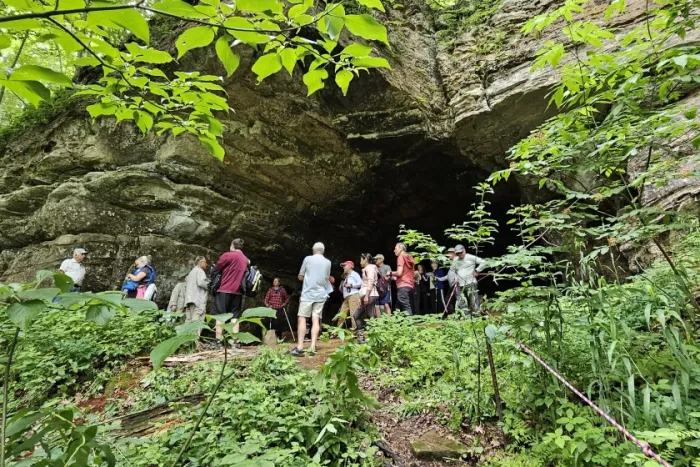
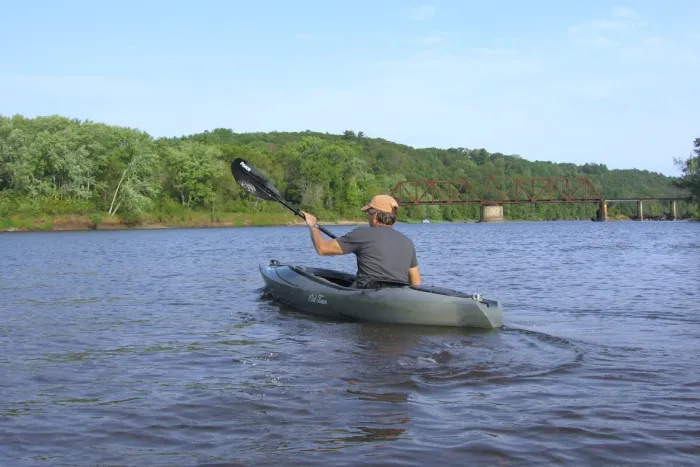
Back by popular demand! Paddle and hike your way through St. Croix River Valley history. This guided adventure begins in Osceola with a rugged hike to Knapp’s Cave—once used by Native Americans and early Swedish settlers—followed by a scenic paddle to Log House Landing in Scandia, where immigrants once arrived by steamship. Learn about the cave's geology -- and hear lively stories from the golden age of river travel, when post–Civil War steamboat excursions featured music, dancing, and even circus outings aboard boats like the G.B. Knapp.
A local outfitter will provide canoes or kayaks (choose single or tandem) and will transport participants back to their cars in Osceola. A limited number of slots are available to bring your own canoe/kayak -- but you must provide your own transportation back to Osceola Landing.
Knowledgeable kayak guides will lead the way for paddle groups of about 20 people plus guides. A light snack and sparkling water or juice will be provided during the hike portion of the event. Please bring your own bottle of water to stay hydrated throughout the afternoon.
IMPORTANT NOTES: The trip will involve steep slopes at both Knapp's Cave and Log House Landing, as well as approximately 2-3 hours of paddling. Participants must be physically fit and able to manage getting into and out of a kayak on their own, land on a beach, and hike steep slopes. Please wear appropriate shoes for the hike and bring insect repellent and water. Youth under age 18 must be accompanied by an adult.
PLEASE ARRIVE AT LEAST 30 MINUTES BEFORE your departure time in order to sign a waiver, select your kayak/canoe, and get set up for the launch time.
Rain Date:
In case of inclement weather, this event will move to the following Thursday, June 25, at the same times. We will email attendees the morning of the event to communicate plans in the case of rainy / stormy weather.
About Knapp's Cave
Knapp’s Cave is the largest natural cave in the St. Croix River Valley. Archaeological evidence suggests that it was used as a temporary camp by Native Americans as early as the Archaic period (7000 – 500 BC). Nearby Cedar Bend was once marked by a large cedar tree and was considered a boundary marker between the Ojibwe and Dakota.
During the height of Swedish immigration, newcomers sometimes used the cave for temporary housing until they could build a suitable home. It was rumored that a thief once stashed 16 head of cattle here in the 1870s.
Other Events At This Venue
Mentioned In
Related Listings