


How to Hunt for Wild Turkeys in Minnesota
Minnesota’s wild turkeys are where you find them. Sounds trite, but it’s not far from reality.
Since the early 1970s, the expansion of wild turkey flocks in the state represents a great conservation comeback story. Today’s estimated population is about 70,000 birds, a long way from… well, the bird couldn’t be found. Efforts to reintroduce the bird, which started in the 1920s, failed for various reasons.
Finally, in 1971, the Minnesota Department of Natural Resources obtained 29 wild turkeys from Missouri in a trade for dozens of Minnesota ruffed grouse. The 29 birds, known as the eastern subspecies, were released in Houston County, and the comeback story began. As the birds multiplied, the DNR and local chapters of the National Wild Turkey Federation began a trap and transplant operation to start new flocks in suitable habitats.
The rest is history.
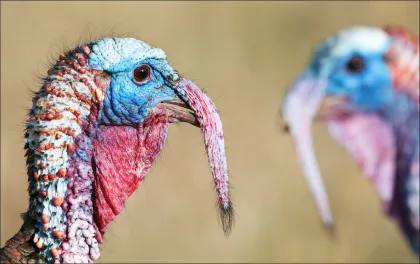
While finding flocks of wild turkeys has never been easier (ask residents of the Minneapolis suburb Edina, where turkeys roam some neighborhoods), the best places to start hunting are along rivers like the St. Croix and the Minnesota. Most rivers provide the wooded habitat along the banks that turkeys require.
Beyond rivers, many state forests harbor birds. DNR wildlife management areas that provide forest habitat will also likely support flocks of turkeys. Private farmland mixed with woodlands may also have turkeys. And landowners are often willing to give permission to hunt if you ask.
So how do you know if birds are present in public or private lands? There’s only one way: Do some scouting. Starting in March, shortly after sunrise, male turkeys (gobblers) tend to greet the day by gobbling from their tree roosts before flying down.

What’s that mean? You have to be there to listen.
Once gobblers are on the ground, the gobbling often subsides. However, you might prompt a gobble by using a turkey call (box or slate) to sound like a lonely hen looking for company.
After daybreak, turkey flocks often head to open fields alongside the woods to feed and perform their courtship antics. Scouting those places with binoculars is another way to confirm your hunting spot has turkeys.
Depending on the license you purchase, half the battle to a successful hunt is knowing when your turkey season opens and when birds are roaming your hunting land. The rest is up to you.
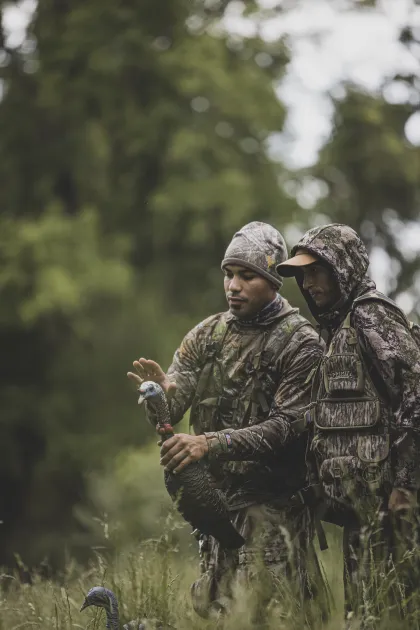
With spring turkey hunting, you call like a lonely hen. The gobbler likes the company of hens because, after all, it is mating season. If the gobbler hears you and answers, he knows exactly where you are.
That doesn’t mean he will run to your hiding spot and end up on a dinner table. Courtship for a wild turkey is actually the opposite. The gobbler expects the hen to come to him; your job is to reverse the plan.
If a gobbler responds to your call but doesn’t show, it often means he already has some hen friends by his side and is unwilling to leave them to find you.
Gobble, Gobble, Gobble
More Wild Turkey Hunting Tips
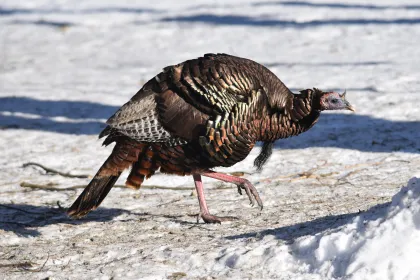
You don’t have to be in the woods before dawn, but it’s often the best ploy. First, simply listen for turkey gobbling or hens clucking. When turkeys are still in their tree roosts, make a soft hen call. If the gobbler answers, stop calling. He knows a hen is nearby.
Once the birds fly to the ground, resume soft calling to remind him you’re waiting for the big boy. Calling too loud is a common mistake as the bird judges your location based on volume.
If a hen responds to your hen chirps, answer her and try to start an argument. She might come to find you to decide who is head of the pecking order. If she heads your way, chances are her boyfriend will follow.
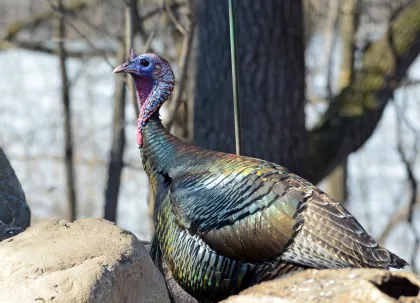
Once a gobbler sounds like he is moving your way, stop calling or just do quiet purrs like a contented hen. Once he’s on his way to find you, no need to keep enticing him. He’s made up his mind to find this new hen.
Listen to turkey calling on YouTube and imitate what you hear, especially the rhythm of a hen’s clucks and purrs. If you’re new to turkey calling, a box call is the easiest to use. With a little practice, it’s the only call you need. My favorite is known as a slate call used with a wooden peg. It takes more practice, however.
Turkey decoys are also effective if you’re hunting the edge of a field, and place the decoys where turkeys will easily see them. Three decoys — two hens and one jake — are often effective. A single hen also works. If the birds are shying from your decoys, remove the jake.
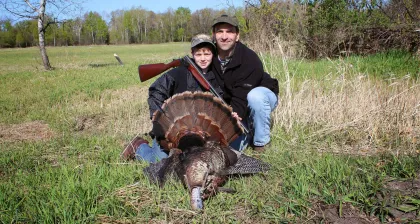
There’s one rule to remember: The wild turkey is predictably unpredictable.
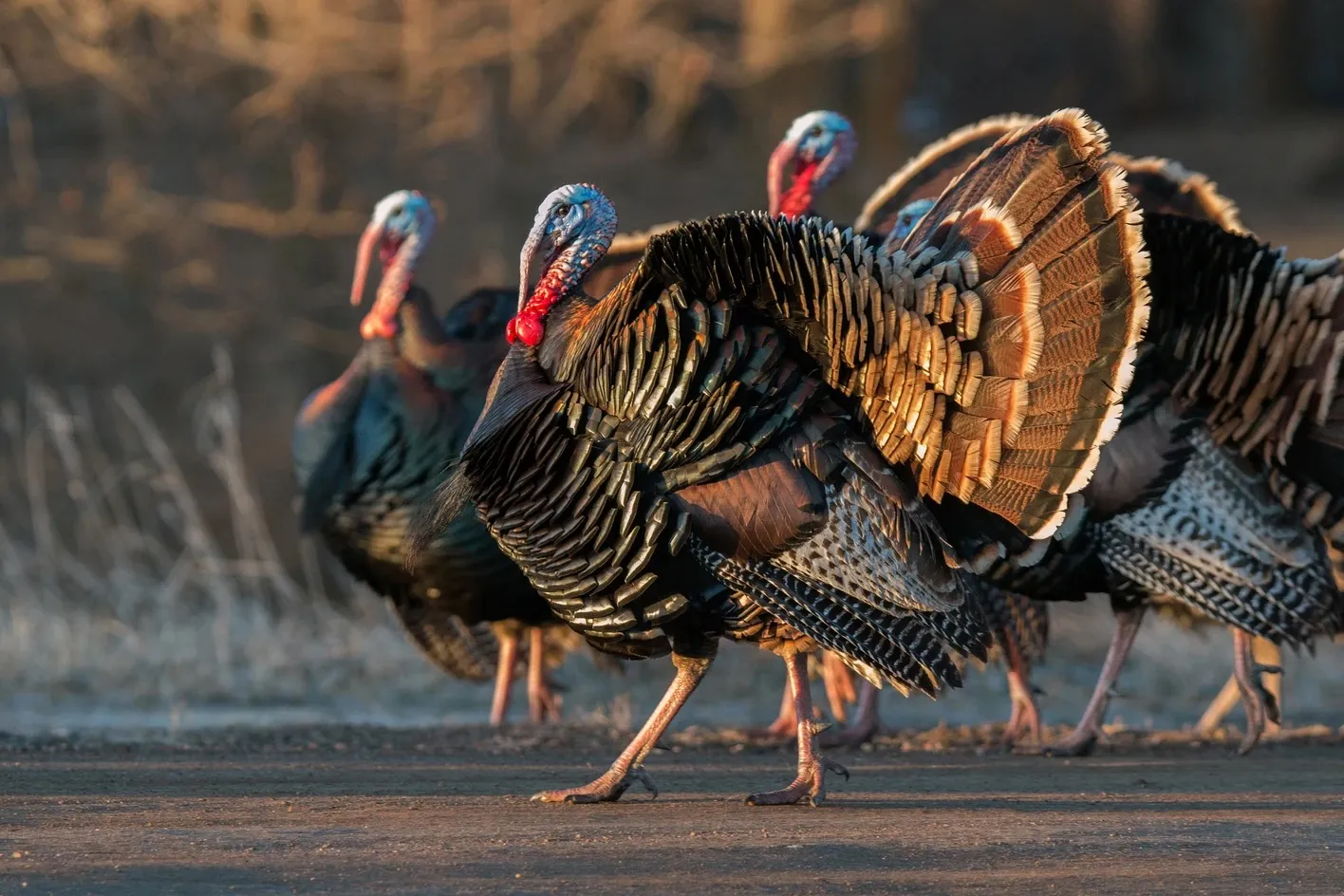
Yet sometimes your hen calling ends in a magical moment. The big bird fans, struts, and waddles your way in a turkey courting gesture that makes forever memories.
Once you experience such a special wild turkey relationship, let’s just say you’ll be addicted to one of the greatest of wild game, the wild turkey.
Find out more about hunting in Minnesota.