Where to Forage For Wild Food in Minnesota
Minnesota is a veritable wonderland of wild food — if you know where to look. In this article, we’ll examine some of the most popular mushrooms, plants, fruit and nuts to look for in Minnesota, along with where to find them and what you can do with them.
One of the most important things to know about foraging is where you can harvest things and what is legal to harvest. It’s currently illegal to gather any plant material from state land, but you can legally pick mushrooms, nuts and berries in state parks and state forests.
County parks can vary in their regulations. For example, the Three Rivers Park District doesn’t allow foraging of anything at all, so make sure you know the local regulations before you go out.
With that out of the way, here’s a list of some of the most popular things you can forage in Minnesota throughout the year.
-
Black Raspberries
 Black raspberry ice cream / Credit: Alan Bergo
Long a favorite among berry pickers for their rich, raspberry flavor without the acidity, black caps, as they’re known, are a perfect entry-level fruit for beginning foragers and a specialty of the Midwest. Large bushes of brambles are easy to spot along trails in hardwood forests.
The berries are dependably ripe around mid-July and will be harvestable for a week or two. If you find some on a friend’s property, they’re easy to propagate using a cutting.
Picking berries with the family makes a great summer tradition, especially when the reward is a scoop of black raspberry ice cream.
-
Black Walnuts
Black walnuts and black walnut molasses syrup / Credit: Alan BergoMost people have seen the round, green balls that fall into yards in October. Much more than an ankle hazard or food for squirrels, black walnuts have long been a staple in the American South for their unique flavor that’s woodsy, floral, and genuinely hard to describe unless you’ve tasted them.
Processing the nuts is a labor of love, but they can also be harvested when green and tender to make the famous Italian black walnut liquor called nocino, or sliced and packed in brown sugar to make black walnut molasses syrup.
-
Blueberries
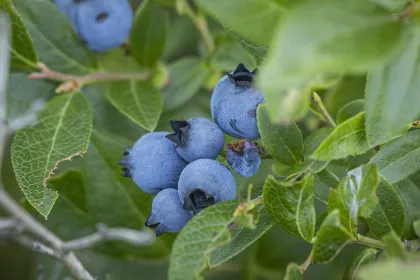
Wild blueberries / Credit: Alan BergoTo many other foragers and me, nothing says peak summer like the taste of a sun-ripened blueberry. Although we don’t have the sprawling pine barrens of Maine, you can still pick wild blueberries by the bucketful without going to a u-pick farm.
Wild blueberries are dependably ripe the last weekend of July through the first week of August, with the best place to find them being coniferous forests up near Brainerd and the surrounding area.
Freeze them on a tray, transfer to a bag, and they’ll keep frozen just like any other fruit. I often use frozen fruit to make a simple fruit barbecue sauce if I don’t want to make jam or jelly.
-
Chanterelles
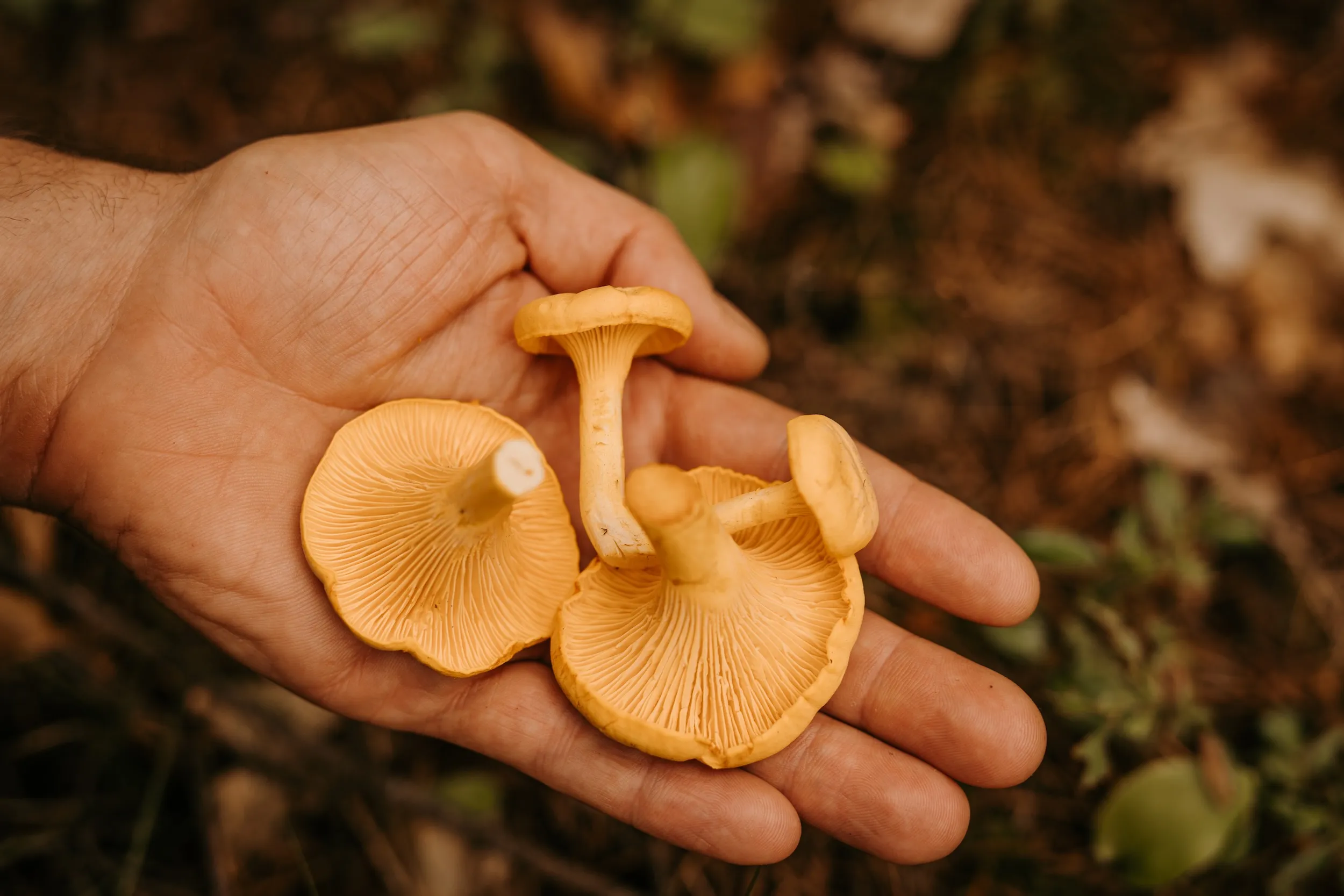
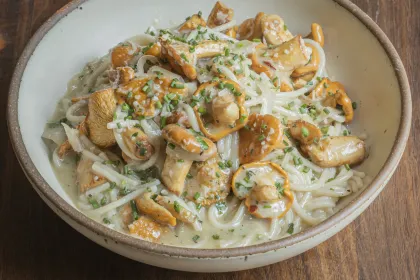
Chanterelle pasta / Credit: Alan BergoWith their attractive egg-yolk color and apricot-like aroma, chanterelles are among the most popular wild mushrooms in the world.
We have several varieties in Minnesota that are all delicious. They typically appear in early to mid-July around red and white oak trees in the bottom two-thirds of the state. In the Northern third, a slightly larger variety appears a few weeks later, growing with red pine and balsam fir.
Prized around the world, one of my favorite things to make with them is a chanterelle pasta one of my old chefs taught me.
-
Chicken of the Woods
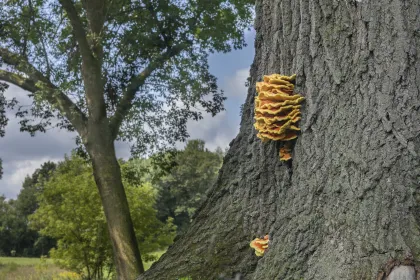
Wild chicken of the woods mushrooms / Credit: Alan BergoWith their delicious texture reminiscent of chicken, sulphur shelf mushrooms (chicken of the woods) are among the most popular edible wild mushrooms. They appear sporadically from late May to September, especially after rain.
Like hen of the woods, they are parasites of oak trees, so looking for pops of orange on stumps and fallen trees in hardwood forests — especially in the lower two-thirds of the state — is the best way to find them.
Some people can’t tolerate eating them, so it’s important to prepare small amounts (1-2 oz) of well-cooked mushrooms to start. Young tender mushrooms without bug damage are the best, as they become woody with age.
If you’re lucky enough to find a nice, tender one, try making chicken-fried chicken of the woods.
-
Chokecherries
Chokecherries and chokecherry syrup / Credit: Alan BergoA staple of indigenous people in the region for thousands of years, chokecherries may be small, but good things come in small packages. The fruit of a small shrub tree, chokecherries ripen around August, and you can collect large amounts of them from a small stand in a good year.
The flavor is tart and astringent, so they’re typically made into jelly or my favorite: chokecherry syrup. While similar, the non-native black cherry is typically a large tree rather than a shrub. It’s also locally abundant but ripens later — around September.
-
Golden Oyster Mushrooms
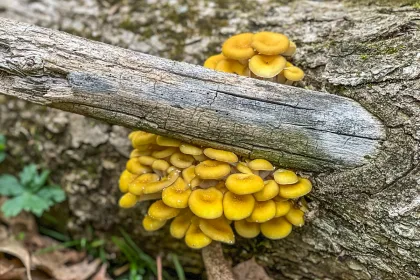
Wild golden oyster mushrooms / Credit: Alan BergoGolden oyster mushrooms are an invasive species of fungi from Siberia that escaped through cultivation. One of the most delicious species of oyster mushrooms around, they’ll appear throughout the year after rains on elms, cherry, and other hardwood trees, but the best time to get them is spring, when the morels are out.
Make sure to inspect them for bugs, as they can be prone to them. One of my favorite things to make with them, and with other types of oyster mushrooms, is my crispy baked oyster mushrooms.
-
Hen of the Woods
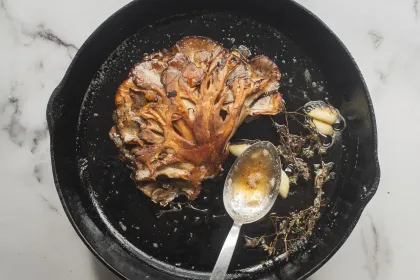
Hen of the woods steaks / Credit: Alan BergoWith their often-massive size and rich, meaty flavor, hen of the woods is a special treat in the fall, and one of the most popular edible mushrooms to hunt in Minnesota. A parasite of red and white oak trees, like chicken of the woods, they appear later in the year, typically around late August through October.
They’re most common in the lower two-thirds of the state, particularly around the metro area and suburbs. If you’re lucky enough to find a nice young mushroom, you have to try making hen of the woods steaks.
-
Morels
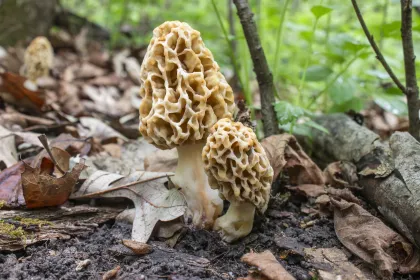
Wild morels / Credit: Alan BergoMinnesota’s official state mushroom is probably the most popular statewide. While they’re typically thought of as growing with dead elms, they’ll grow anywhere there’s been a disturbance; lightning strikes, floods, burns, logging and disease can all produce morels.
A few different varieties grow in Minnesota. Typical riverbank morels (known as greys and blondes) will dependably appear around Mother’s Day in May. Black morels are slightly different and are often found in Northern Minnesota in stands of young aspen, a week or two before riverbank morels are found.
Any type of morel you find will make a cream of morel soup that’ll turn hunting them into a yearly tradition.
-
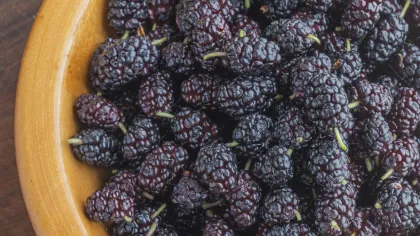
Mulberries
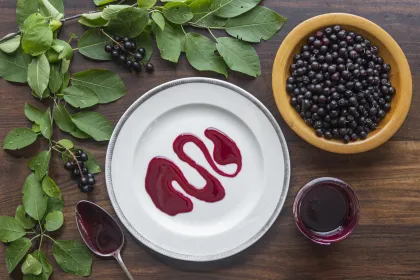
 A bowl of mulberries / Credit: Alan Bergo
The first fruit to ripen in Minnesota, along with serviceberries, is white mulberries — a confusing name, considering the fruit is typically dark purplish black. Most trees are an invasive Asian mulberry, and when the fruit ripens around mid-June, the tell-tale blotches of squished fruit are easy to spot on the sidewalk. The best way to find them is to look for trees heavy with fruit and ask the landowner for permission to pick.
Lying a tarp down and shaking the tree is the easiest way to harvest the fruit, and I’ve brought home over 15 pounds from a single tree in a good year. A number of my friends pick them every year now just to make an old-fashioned mulberry pie.
The juicy, raisin-like flavor can vary dramatically from tree to tree, so make sure to taste a few from the tree before you harvest a bunch.
-
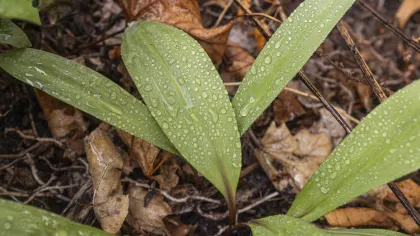
Ramps
Wild ramps / Credit: Alan BergoOur native wild leek is one of the most versatile and delicious plants available to foragers. You’ll need access to some private land if you want to dig the bulbs or cut the leaves, but during late summer, the seeds can be gathered for planting in a shady spot in your yard.
Ramps also transplant very well. If the roots are attached, you can plant ramps you purchase at a farmers market or coop on your property. It’ll take a few years for a colony to get established, but once you have a healthy patch, you’ll want to try making ramp leaf pesto.
-
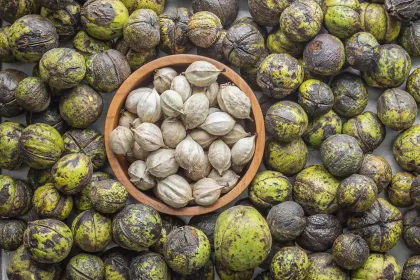
Shagbark Hickory Nuts
Shagbark hickory nuts / Credit: Alan BergoA delicious nut with a buttery pecan-like taste. Although we’re slightly north of the typical range of the shagbark hickory, the southeastern area of the state, around Winona and the Driftless region, has many shagbark hickory trees. Great River Bluffs State Park even has a sign about them, making it a great place to go to identify your first one.
The nuts begin to fall in early October and can be collected in large quantities if you get the timing right. Besides the nuts, which are great made into the classic Cherokee kanuchi or hickory nut milk, many people in the South also use the bark for smoking or making shagbark hickory syrup.
-
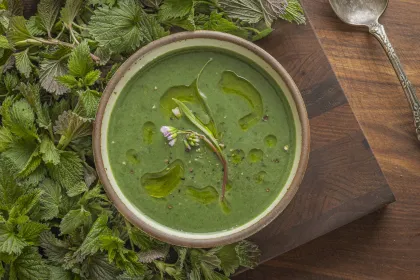
Stinging Nettles
Nettle soup / Credit: Alan BergoOne of the most widely eaten wild plants around the world, nettles are a delicious, nutritional powerhouse. The stinging part of the nettle is actually a crystal, and breaking, crushing, drying, or cooking the plant removes it.
As they’re weedy, it’s easy to find them growing in people’s yards or around the edges of farm fields (ideally organic farms). Dig up a cluster of rhizomes to plant at home, and you’ll never be without.
While they’re delicious steamed for 4-5 minutes and dressed with butter at the table with a squeeze of lemon, arguably the most famous nettle recipe everyone should try is classic nettle soup, a staple in Scandinavia and Western Europe.
-
Wild Plums
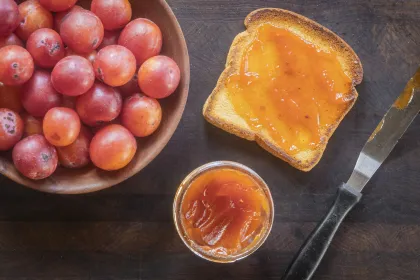
Wild plum jam / Credit: Alan BergoWidespread across the state, the American wild plum is abundant and easy to recognize. Common on trails and the edges of hardwood forests, the fruit is ripe when it starts to fall from the tree around mid-August.
While they look and feel like typical plums, the skin is tart and astringent, so the plums must be very ripe and mashed through a colander or screen to extract the sweet, tart pulp. One taste of wild plum jam and you’ll be hooked.
Just like mulberries, some trees make fruit that’s better than others, so when you find a tree you like, be sure to make note of it.


Foraging Resources & Education
Foraging increases in popularity every year, and there are now several educators across the state who teach in-person foraging classes. They’re typically around the Twin Cities, as well as Duluth.
If you’re in the metro area, look up Ironwood Foraging, Chick of the Woods Foraging, or Four Seasons Foraging. Ariel’s Mushroom Co. teaches classes up near Duluth, and a few educators teach foraging and mushroom classes at the North House Folk School in Grand Marais, including Michael Karns and Lisa Golden Schroeder, the co-authors of the book “Untamed Mushrooms: From Field to Table.”
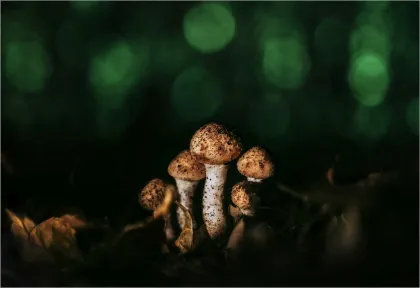
If you’re specifically interested in mushrooms, the Minnesota Mycological Society is one of the oldest in the country. They lead in-person mushroom forays throughout the year, focusing on identification, which is one of the fastest ways to get up to speed on the best edible mushrooms in the area.
In-person learning with an expert is the fastest way to learn, but every forager should also have a field guide or two that are specific to their region. One of the most renowned foragers in the world, Samuel Thayer of Forager’s Harvest, is based in Northern Wisconsin and has numerous foraging books available. There are also smaller pocket guides to Minnesota berries and mushrooms available from Teresa Marrone.
Find more things to do outside in Minnesota.