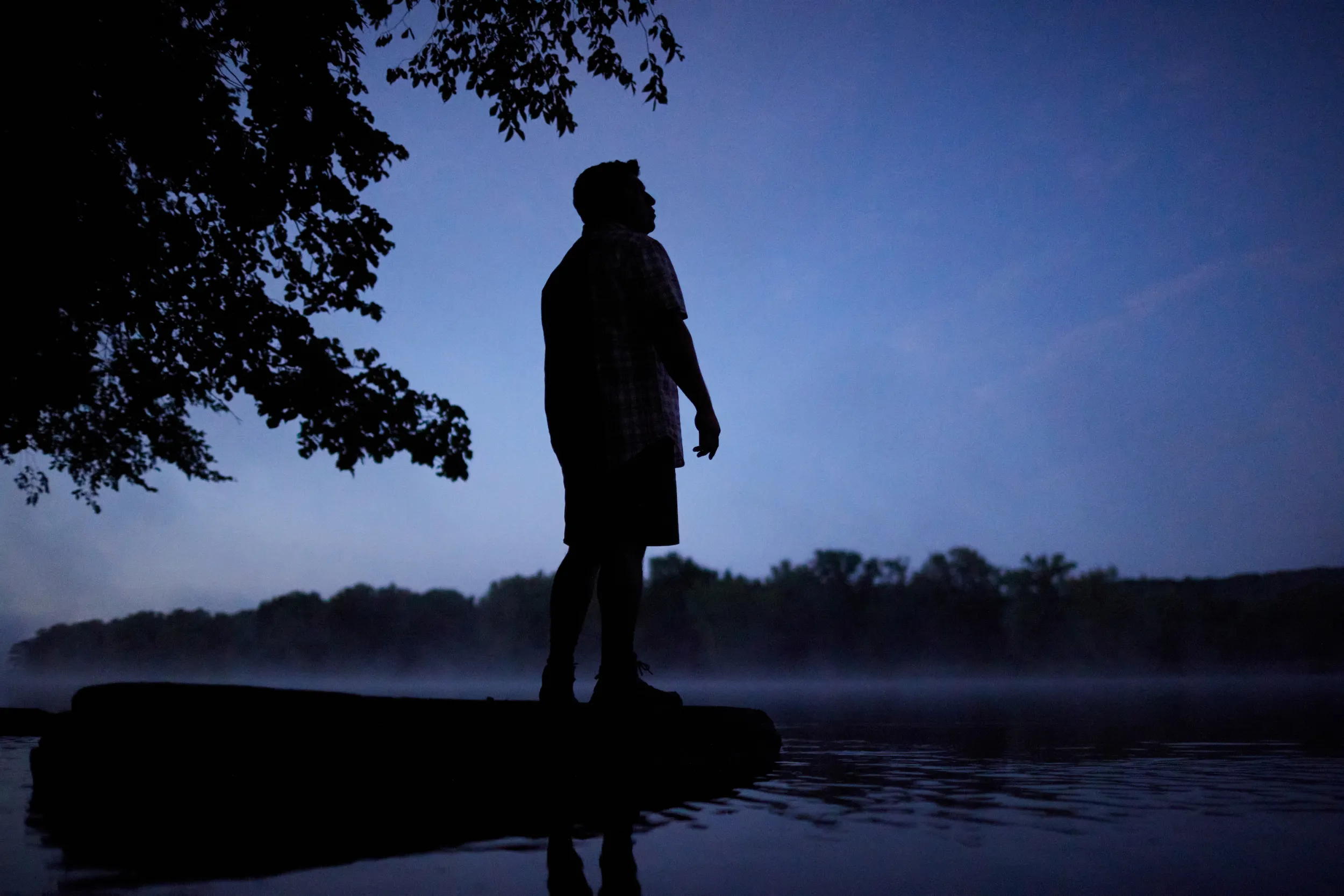
Things to Do Outside in the St. Croix River Valley
Minnesota has 92,000 miles of rivers to paddle and explore. Yet some waterways loom larger than others. The St. Croix is one of the state’s largest, deepest and wildest rivers, rivaled only by the Mississippi and the Minnesota. Its water can be as deep as 100 feet and is home to over 60 species of fish. The granite cliffs and high bluffs that line the shore make for some of the best rock climbing in the state.
The St. Croix is flanked by eight state parks (five in Minnesota, three in Wisconsin) and six Scientific and Natural Areas. It’s also one of the country’s top canoe camping trails and home to two major thru-hiking trails, three downhill ski areas, and excellent road and mountain biking. Yet it remains an overlooked outdoor destination.
“It's a national park less than an hour from the Twin Cities,” says Matt Poppleton, director of the Wild Rivers Conservancy. “It’s this wild and scenic protected area where you’re in a true wilderness setting, and getting to the different landings to fish, paddle, or hike is so accessible. A lot of people just aren’t aware of it.”
Here are all the adventures waiting for you along this historic waterway.
Biking

One of the best ways to reach the St. Croix River from the Twin Cities is by bike on the Gateway State Trail, a paved path from St. Paul to Pine Point Regional Park that also branches into Stillwater via the Brown’s Creek State Trail. Once there, you can ride the St. Croix River Crossing Loop, a 4.7-mile trail that crosses the river on the historic Lift Bridge, winds through Houlton, and returns via the Stillwater Crossing interstate bridge.
For mountain biking, head across the river to the Woolly Bike Trails in St. Croix Falls or the trails at Willow River State Park. Wisconsin also offers rail-trails like the Stower Seven Lakes State Trail (14 miles) and the Cattail State Trail (18 miles), while Minnesota is home to the Swedish Immigrant Regional Trail (22 miles), which runs from Taylor’s Falls west to the town of Wyoming. Beginning at St. Croix Falls, the Gandy Dancer Trail stretches 47 miles through Wisconsin, 31 miles through Minnesota, and another 15 miles back through Wisconsin before ending in Superior.
Camping
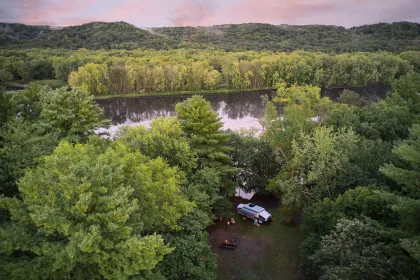
The St. Croix River is home to hundreds of campsites in state parks and along the river, but you’re never far from a town — many thrive on tourism, like Marine on St. Croix, Taylors Falls, and Stillwater. There are at least eight state parks along the river, as well as camping at St. Croix Bluffs and the Wild Vines Winery & Campground.
Climbing

At Interstate State Park, where basalt cliffs rise high on either side of the river, you’ll find a Midwest magnet for rock climbers, with routes like Lunge or Plunge, Sizzlefoot, and Piece of Cake.
For ice climbing, head up the Kettle River to world-class Sandstone Ice Park, which hosts the Sandstone Ice Festival every winter.
Fishing
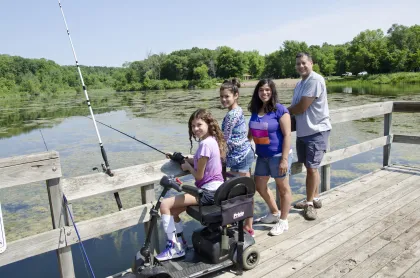
In the winter of 2019, an ice fisherman pulled a sturgeon from the St. Croix River so large that five holes had to be drilled to land it. The record-setting fish measured six feet long, weighed 120 pounds, and was about 70 years old. It was released back into the river but stands as a reminder that the St. Croix is an epic fishing destination, home to more than 60 species.
Beyond the usual game fish, it’s also a destination river for non-game anglers. According to Tyler Winter, director of Native Fish for Tomorrow, the St. Croix is full of so-called rough fish, including spotted suckers, freshwater drum, longnose gar, bowfin, and redhorse.
There’s also excellent trout fishing, and the Wild Rivers Conservancy offers classes for anyone interested in casting a fly rod or catching panfish for dinner.
Hiking
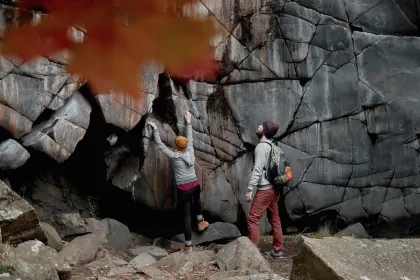
If your preferred pace is slower, the St. Croix Valley is home to hundreds of miles of hiking trails. Options range from the 30 miles of trails in Wild River State Park to shorter routes at St. Croix Bluffs Regional Park, Pine Point Regional Park, and beyond.
For more challenging terrain, head to Interstate State Park, where basalt cliffs create steep climbs and unique geological features. The park is famous for its “glacial potholes,” carved into the bedrock by swirling sand and water from retreating glaciers some 12,000 years ago. Be sure to check out the “Bottomless Pit,” the world’s deepest explored glacial pothole at 60 feet.
If you’re feeling more ambitious, start in St. Croix Falls at the trailhead for Wisconsin’s 1,200-mile Ice Age Trail. Or head upstream to the St. Croix tributary, the Namekagon River, to connect with the 4,800-mile North Country Trail, which spans from North Dakota to Vermont.
Nature
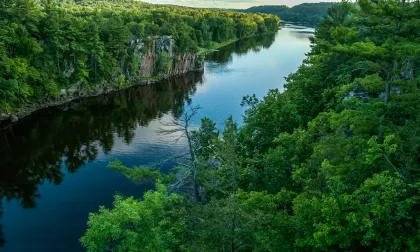
The St. Croix River was one of eight rivers protected under the federal Wild and Scenic Rivers Act in 1968. That legislation has preserved the river’s pristine character for thousands of years — keeping it a natural home for deciduous forests, white pine stands, oak savannas, and upland prairies.
One of the best places to explore this ecosystem is the Carpenter Nature Center on the Lower St. Croix. With about 20 miles of trails and campuses on both sides of the river, it features “ambassador animals” like peregrine falcons, hognose snakes, and Blanding’s turtles. You can also visit the national park’s visitor center in St. Croix Falls for more information.
Paddling
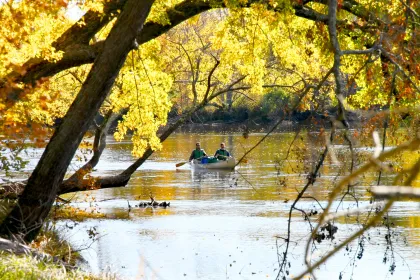
The St. Croix River offers 169 miles of pristine paddling, which can be enjoyed as day trips or strung together into a multi-day expedition. Free, first-come, first-served campsites managed by the National Park Service are available along the way. (You can extend the journey even farther by adding the Namekagon tributary to the north.)
This may be the best way to experience one of the most dramatic and historic rivers in North America. The Wild Rivers Conservancy offers guided trips and paddling lessons for those who want an introduction.
Trail Running
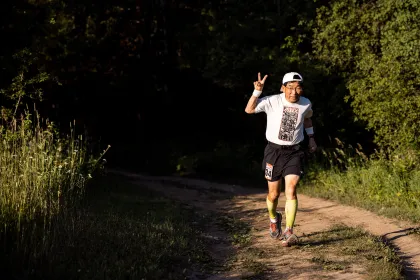
Twin Cities trail runners know the best place in the metro to train for an ultramarathon is Afton State Park, which has 20 miles of trails up and down the bluffs overlooking the St. Croix River. Every summer the Afton Trail Run 25K and 50K races are held here.
Upstream, William O’Brien State Park offers 16 miles of trails and hosts the O’Brien Trail Races (50K to 5K) each September. Further north, St. Croix State Park—Minnesota’s largest at 33,000 acres—features 127 miles of hiking trails. You can also run (or ski or bike) in the St. Croix 40 Winter Ultra.
Winter Fun
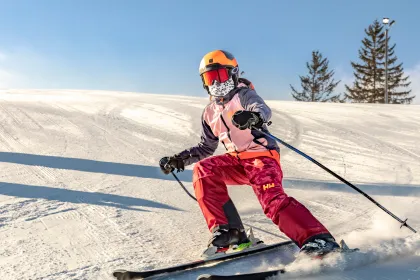
When winter hits, the St. Croix offers plenty of outdoor options, including ice fishing, snowshoeing, and fat biking.
Since this was the proving ground for Olympic gold medalist Jessie Diggins, you can’t skip cross-country skiing. Miles of groomed trails await at Afton State Park, William O’Brien State Park, and St. Croix State Park (snow permitting).
Or, if you’d like gravity’s help, choose from three excellent downhill ski areas along the river: Afton Alps, Wild Mountain, and Trollhaugen.
Additional Resources
For more on what to do along the St. Croix, see Angie Hong’s book Exploring the St. Croix River Valley: Adventures on and Off the Water. For a deeper history, check out James Taylor Dunn’s classic The St. Croix: Midwest Border River, as well as the National Park Service’s Time and the River: A History of the Saint Croix.
River navigation maps are available at the National Park Service site, and you can book campsites through the Minnesota State Parks and Wisconsin State Parks websites.
Be sure to also explore the Carpenter Nature Center and the Scientific and Natural Areas along the river. More information can be found at the St. Croix Scenic Byway website.
Find more things to do outdoors in Minnesota.