Minnesota's Best Historical Sites
While it might not have the nation’s longest legacy, the country’s 32nd state has plenty of rich history to explore. From notable firsts (the first water skis, the first indoor shopping mall) to famous births (F. Scott Fitzgerald, Judy Garland) and prominent sites (the Headwaters of the Mississippi), there’s a wide range of worthwhile Minnesotan lore and legend to visit, no matter where you are.
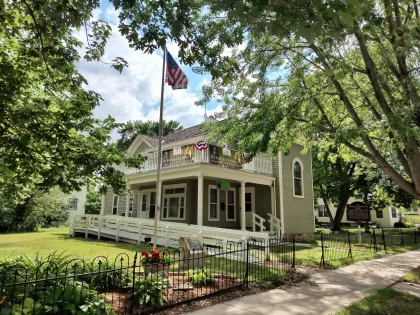
Andrew J. Volstead House Museum
Granite Falls
Andrew J. Volstead isn’t generally considered an American hero these days. After all, his name graces the informal name for the act that established the prohibition of alcoholic drinks in the U.S. He was chairman of the House Judiciary Committee and managed the legislation despite not being a strict prohibitionist.
In Minnesota, however, Volstead is largely remembered as the architect of the Capper-Volstead Act, which allowed small farmers to engage in collective bargaining to get better prices. The headquarters of the Granite Falls Historical Society also happens to be his former house, a national landmark that's open to the public.
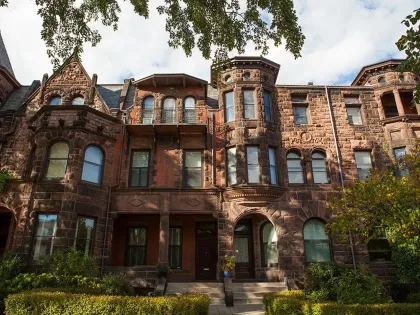
F. Scott Fitzgerald House
St. Paul
St. Paul’s Summit Avenue is known for its large, palatial homes — a fitting location for roaring ‘20s novelist F. Scott Fitzgerald. Fitzgerald’s parents moved into his brick-faced row house at 599 Summit Ave in 1918, while the future "Great Gatsby" author was at Princeton. The following year, Fitzgerald rewrote his first novel, "This Side of Paradise."
Now listed as a National Historic Landmark, the house is a popular drive-by (no interior access) for the writer’s fans, who will find several other local significant F. Scott spots in town. He was born at 481 Laurel Avenue in St. Paul, and frequently haunted both the Commodore Bar and Grill at 79 Western Ave N in St. Paul and the White Bear Yacht Club in White Bear Lake.
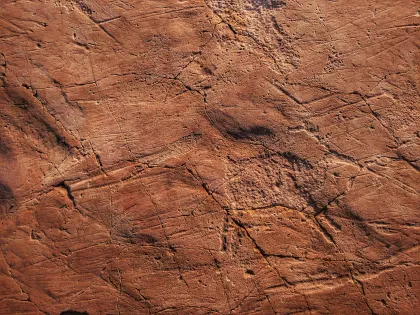
Jeffers Petroglyphs
Comfrey
This place rocks — literally. More than 5,000 sacred Native American rock carvings, or petroglyphs, pepper the Sioux quartzite outcroppings at this ancient site, now managed by the Minnesota Historical Society. While some of the patterns resemble Dakota bead and quill motifs, others seem to hark back much earlier. Some of the petroglyphs are as much as 7,000 years old, even predating the invention of bows and arrows.
The area is still significant to Indigenous people in the area, and it’s one of the world’s oldest continuously used sacred sites. Around the site is 33 acres of native prairie and 47 acres of prairie restoration — one of the first such projects in Minnesota.
Listen as you walk through the tall grass and wildflowers; you never know what ancient voices might speak to you.

Judy Garland Birthplace Museum
Grand Rapids
It’s not quite over the rainbow, but this two-acre house and museum is a must for any Judy Garland or "Wizard of Oz" fans.
Grand Rapids resident artist Jackie Dingmann established this honorific of Francis Gum, whose stage name would be known around the world. The 13,000-square-foot museum features artifacts from Garland’s young life and was the longtime home of the ruby slippers worn in the famous Oz movie, which have had a journey as wild as Dorothy’s.

Lake Pepin
Lake City
In 1922, a young Ralph Wilford Samuelson wanted to one-up his favored pastime, aquaplaning — basically boat-propelled surfing at top speed — after becoming fascinated by the idea of skimming or skiing across water. He experimented with materials and techniques for months, spending hours getting soaked by unsuccessful attempts in Lake Pepin before landing on what would become the world’s first water skis and taking his first triumphant ride across the lake on July 2, 1922, the day before he turned 19.
Samuelson became quite a showman, performing tricks and producing water shows that attracted quite a crowd. Though he never patented his design, he was inducted into the Minnesota Inventors Hall of Fame and is widely recognized as the father of waterskiing. Every June, Lake City hosts the weekend-long Water Ski Days festival in honor of Samuelson and the decades of fun he inspired.

Mill City Museum
Minneapolis
Minneapolis is called Mill City because its Mississippi River location made it the perfect place for a grain milling boom. In fact, the city was considered the largest flour producer in the world between the 1880s and 1930s.
The Mill City Museum is housed in the ruins of the Washburn A Mill, which was the largest mill in the world in 1880 and a cornerstone of the eventual General Mills company. (The mill was destroyed by an explosion in 1878 that instantly killed 14 mill workers and resulted in the deaths of at least four others.)
The museum opened in 2003, and features a wide range of permanent exhibits that highlight the importance of flour milling to Minneapolis and the Midwest. You’ll see 19th-century flour milling machines, design your own cereal box, check out vintage flour ads, learn about grains and flour making in the baking lab, and take a photo under the scenic Gold Medal Flour sign.
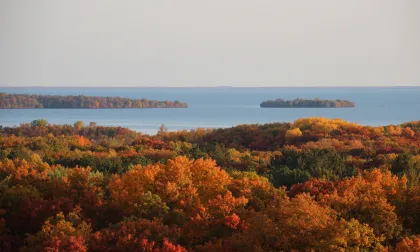
Mille Lacs Kathio State Park
Onamia
Near the beautiful, relatively shallow 270-square-mile Lake Mille Lacs is this state park that preserves Dakota and Ojibwe habitation sites and mound groups thought to date back from 3000 B.C. and 1750 A.D. There are 19 identified archaeological sites in this park — one of Minnesota’s most significant collections, so please look but don't touch — as well as a popular 100-foot fire tower that offers grand lake views to anyone brave enough to climb it.
Today, the park primarily features second-growth aspen, birch, maple, oak, and other northern hardwood forest, with just a smattering of the conifers that it would have most comprised a century ago.
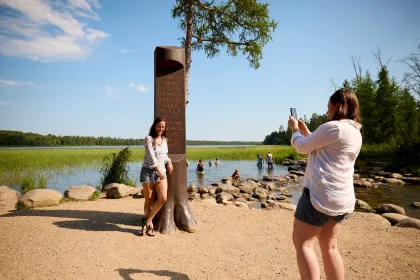
Mississippi River Headwaters
Park Rapids
Who would have thought that the mighty Mississippi River had such humble beginnings? This historic spot in Itasca State Park marks the first tricklings of a more than 2,300 mile journey to the Gulf of Mexico. Wade through the 18-inch-deep headwaters or hop across the rocks, but don’t miss a photo opp with the historical marker: “Here 1475 ft above the ocean the mighty Mississippi begins to flow on its winding way 2552 miles to the Gulf of Mexico.”
Back in 1832, Ojibwe guides showed the headwaters to geographer and geologist Henry Rowe Schoolcraft, who was sent on an expedition to discover the river’s origins. (Of course, Indigenous people knew about the headwaters all along.)

SPAM® Museum
Austin
Don’t knock it till you try it: The canned, shelf-stable lunch meat known as SPAM® was invented by Hormel Foods in 1937 — way before the junk emails that borrow its name — and quickly became a staple on Depression-era tables, in military rations during the second World War, and international cuisine.
Take a free tour of the dedicated SPAM® Museum in downtown Austin, where you’ll find nine galleries dedicated to the foodstuff’s history and global importance, as well as gifts, novelties, unique SPAM® flavors, and plenty of tasty “SPAM®ples.”

Split Rock Lighthouse
Two Harbors
If you’re a photographer — whether you tote a camera or a cell phone — this is the spot for you, reportedly the single most photographed place in the state.
The stately Split Rock Lighthouse was born from tragedy, after nearly 30 boat wrecks in the especially turbulent November of 1905. Five years later, lighthouse construction was completed, and the 7.5-acre facility became a pivotal part of safer iron ore shipping across volatile Lake Superior.
The lighthouse ceased operation in 1969 and became a public historic site in 1971, earning National Historic Landmark status in 2011.
Find more things to do in Minnesota.