
Things to Do in the Minnesota River Valley
Dramatic waterfalls, quiet riverwalks, and the state’s biggest Oktoberfest meet rich Dakota history in the quiet, leafy Minnesota River Valley. Small town charm is abundant in towns like Elysian (best seen by bike!), Olivia (so much corn) and Milan (are we in Norway?). And the River Valley is one of the only places in the state to see buffalo.
Road trip, here we come!
-
Discover Dakota History Along the Minnesota River Valley Scenic Byway (and Beyond)
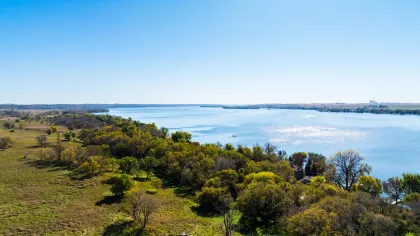
 Big Stone Lake State Park / Credit: Riley Hallaway
Long before Minnesota became a state, the Daḳota people called the valley of the Mni Sóta Wakpa (Minnesota River) home for thousands of years. Many landmarks along the river served as sacred and significant sites not only for the Daḳota but also for other Tribal Nations.
Since the mid-1800s, the river has also played host to Minnesota’s complicated and challenging history with its original peoples. Visitors today can explore this vast history along the Minnesota River Valley Scenic Byway, running from Big Stone Lake to Belle Plaine.
Start your journey at Bde Iŋyaŋ Takiŋyaŋyaŋ (Big Stone Lake), the headwaters of the Minnesota River. The Daḳota named the lake for the area’s granite outcrops, and a Dakota village, Upi Iyahdeya (“Extended Tail Feathers”), existed on an island at the south end of the lake.
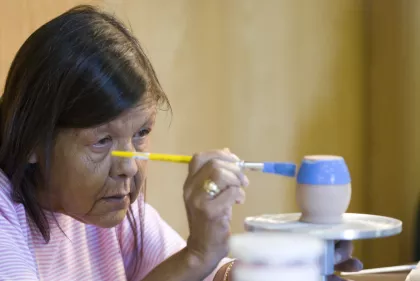
 A pottery demonstration at the Lower Sioux Historical Site
Continue to Bdeíyedaŋ (Lac qui Parle State Park), meaning “little talking lake” in Dakota, which resounds with a chorus of honking, quacking and other vocalizations from migratory birds, particularly splendid in the fall and spring. At Lac qui Parle State Park, visit the historic Fort Renville site, a fur trading post established at the Waḣpetuŋwaŋ Dakota village in 1826.
Next, make your way to Morton, where in 1862, the U.S.-Dakota War first broke out. At the Lower Sioux Agency Historic Site, managed by the Lower Sioux Indian Community, visitors can learn more about the government’s efforts to remove the Bdewakaŋtuŋwaŋ and Waḣpekute bands of Dakota to reservation lands and to colonize them into self-sufficient farmers.*
Explore the history, art and culture of the Dakota Oyate and discover the roots of the U.S.-Dakota War of 1862 in the visitor center exhibit. While in Morton, be sure to visit the Jackpot Junction Casino Hotel, operated by the Lower Sioux Community, and Birch Coulee Battlefield State Historic Site.
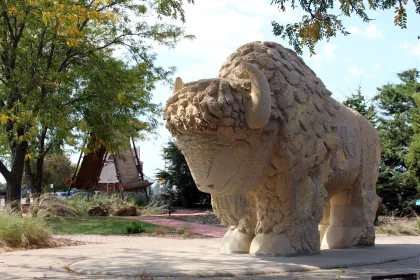
 Reconciliation Park / Credit: Minnesota River Valley Scenic Byway
End your drive along the scenic byway in Mankato, the site of one of Minnesota’s darkest moments. Reconciliation Park, in downtown Mankato, marks the location of the largest mass execution in U.S. history, in which 38 Dakota warriors were hanged by the government following the U.S.-Dakota War of 1862.
The first memorial reconciliation ceremony, sponsored by the Dakota and Mankato communities, was held at this site in 1975. The site includes several statues, including a white buffalo and the “Winter Warrior,” commemorating the events of 1862 and honoring the 38 executed Dakota warriors.
Other must-visit destinations along the route include Prairie’s Edge Casino, operated by the Pejuhutazizi Kapi (Upper Sioux Community), and the Yellow Medicine County Historical Museum in Granite Falls; the Camp Release State Monument in Montevideo; the Fort Ridgley State Park and historic site in Fairfax; and the Treaty Site History Center in St. Peter.
*Note: In 2021 and 2023, the State of Minnesota and Minnesota Historical Society signed land transfers, returning ancestral land to the Lower Sioux Indian Community and Upper Sioux Community, respectively.
-
Take a Bison Drive in Minneopa State Park
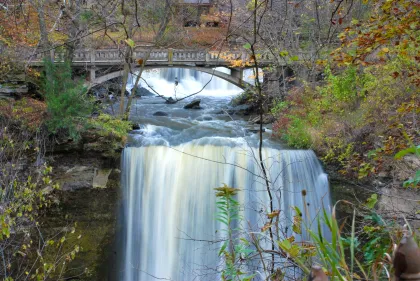
The upper area of Minneopa Falls / Credit: Greater MankatoBreak out your binoculars and see where the bison roam. One of two Minnesota state parks featuring bison, Minneopa State Park also offers sweeping views of the Minnesota River Valley, a beautiful waterfall and a historic mill site.
Minneopa gets its name from the Dakota language, meaning "colored water," and refers to minerals in the water that give it a shimmery rainbow hue in the summer. Visitors can walk the short, paved trail encircling the falls. Then continue on for a panorama of the Minnesota River Valley prairielands.
Bison in Minneopa State Park / Melanie GravesAfter a snack break, it’s time to take a ride along Bison Drive Road.* Only accessible by vehicle, this second portion of the park offers views of a herd of between 30 and 40 bison, managed through the Minnesota Bison Conservation Herd.
This herd is part of a growing partnership between the Minnesota Department of Natural Resources and the Minnesota Zoo to reintroduce bison into Minnesota state parks. Their work extends across the state, from Blue Mounds State Park in southwest Minnesota to Spring Lake Park Reserve south of the Twin Cities.
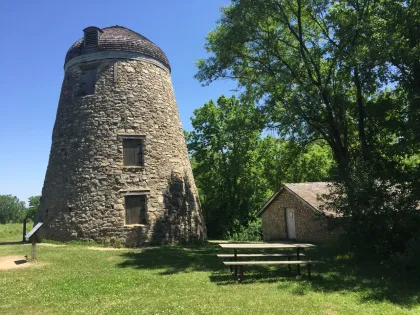
 The historic Seppmann Mill at Minneopa State Park / Credit: Olson & Nesvold Engineers
Visitors can drive through the 325-acre prairie enclosure for an unforgettable glimpse of these majestic animals. Pro tip: Turn your radio on to listen to the prerecorded interpretive information. And finally, remember: You can look and take pictures from a safe distance, but no touching or selfies — these are wild animals, after all.
A visit to the park isn’t complete without a stop at the historic Seppmann Mill site, where you can view the remnants of a wind-powered grist mill built from locally sourced stone and lumber. Or, for a bit more exploration, hike through the park’s oak savanna and native prairie grasslands, which also offer a scenic look at the Bison Drive area.
*Note: Bison Drive Road is currently closed every Wednesday for maintenance.
-
Bike a Reclaimed Railroad Trail
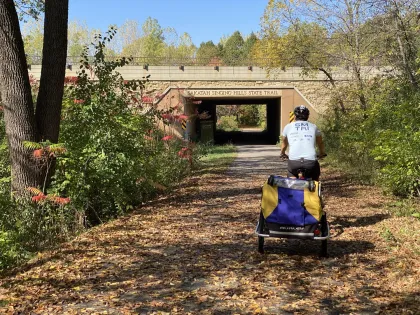
Sakatah Singing Hills State Trail / Credit: Greater MankatoSee a little slice of paradise. The 39-mile paved Sakatah Singing Trail is part of the nationwide Rails-to-Trails movement, which transforms former railroads into picturesque biking, walking and running trails. Stretching between Faribault and Mankato, the Sakatah Singing Trail passes through cool, wooded areas and open, sun-drenched farm fields, showcasing some of the best of southern Minnesota.
Along the way, cyclists pass through several communities, including Madison Lake, Elysian and Morristown, which offer ideal spots for a rest and a bite to eat. Stop at The Landing on Madison in Madison Lake, grab a coffee and a bite at Lolli-Pops in Elysian, or satisfy your sweet tooth at Scoops or What’s the Scoop.
The trail also passes near swimming beaches, offering a chance to cool down along the way. The full ride can be completed in one day, or cyclists can opt for a two-day adventure with overnight stays at campsites, inns or hotels. In winter, the trail is groomed for snowmobiling.
-
Celebrate Oktoberfest in New Ulm
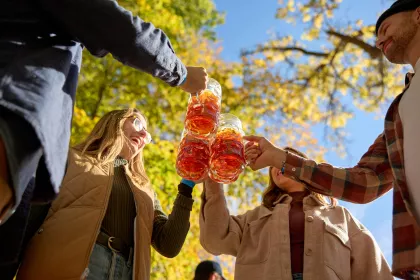
A group of friends toast their steins at Schell's / Paul VincentEin Prosit, ein Prosit der Gemütlichkeit! It’s time to celebrate Oktoberfest in Minnesota’s most Germanic city, New Ulm. So grab your lederhosen and stein, and let’s polka!
Named a Top 10 Oktoberfest destination nationwide for multiple years running, New Ulm hosts its celebration during the first two full weekends in October. Polka, horse-drawn trolley rides, music and other events take place across town and beyond, including at Morgan Creek Vineyard and the historic Schell’s Brewery.
Schell’s has specialized in crisp yet complex German-style beer since 1860, making it the second-oldest family-owned brewery in the U.S. In addition to being the oldest and largest brewery in Minnesota, Schell’s also brews the cult-favorite Grain Belt.
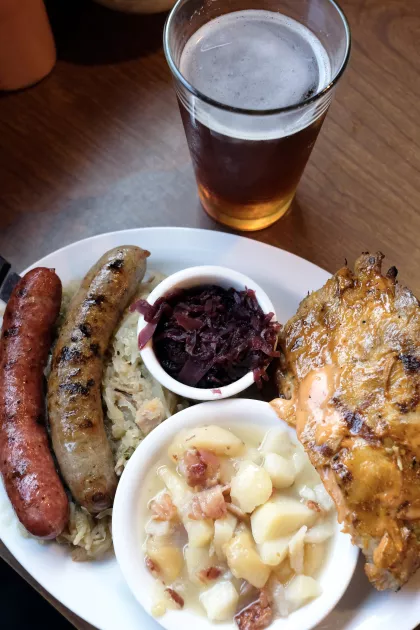
 The sampler at Kaiserhoff / Andrew Parks
If beer isn’t your thing, stop by Black Frost Distilling, also founded and owned by a Schell’s family member. While whisky is the specialty, they also produce gin, vodka and rum, all made from local ingredients.
All that celebrating may make you hungry. Established in 1938, the Kaiserhoff has been serving traditional German fare for decades, but its ribs made it famous. Another historic dining choice is Turner Hall in downtown New Ulm, home to the Rathskeller, Minnesota’s oldest bar.
With a pint in hand and the city’s 45-foot-tall glockenspiel chiming throughout the afternoon, you might just think you’ve made it to Munich.
-
Shop in Mankato's Old Town
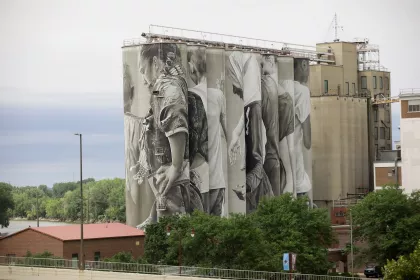
Arden Mills Grain Silos art by Guido Van Helton / Sara HugesFind the perfect gift amid a sea of art. The charming, walkable Old Town neighborhood in Mankato is bustling with dozens of local businesses, as well as art, events, music and history. A significant site for the Dakota and other Tribal Nations, Old Town has long served as a place of gathering, celebration and spirituality. Today, local Mankatoans continue the tradition.
Throughout Old Town, visitors can spot nearly a dozen murals, including the “silos” mural by internationally recognized artist Guido Van Helten. Completed in 2018, it depicts the diverse makeup of the present-day Mankato community. There’s so much art to see, in fact, that Mankato created its own City Art Walking Sculpture Tour, featuring sculptures throughout the neighborhood and across Greater Mankato.
Popular shopping destinations include Lakota Made, Salvage Sisters Mercantile, Bumbelou, Hazelkin & Co. and Pond Road Market, among others. Take a break and grab a coffee or bite at Coffee Hag or Fillin' Station Coffeehouse, located just outside Old Town.
The Dia de los Muertos festival in Old Town Mankato / Casey EkFor something more substantial, Nolabelle Kitchen + Bar, Pagliai’s Pizza and Number 4 Steakhouse are all within walking distance (though there are plenty more nearby).
At the edge of Old Town sits another of the city’s arts landmarks, the Carnegie Art Center. Visitors will find rotating gallery exhibitions, live music from local artists, and classes ranging from guided meditation to charcoal drawing and painting.
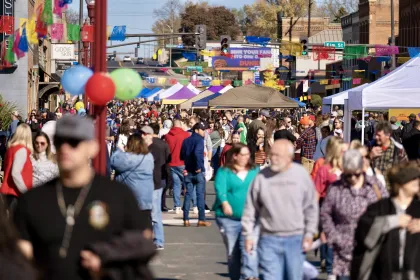
Pro tip: Visit Old Town in the fall for the popular Día de los Muertos festival, which fills the neighborhood with music, food and festivities.
-
See Two Waterfalls at "Little Yellowstone"
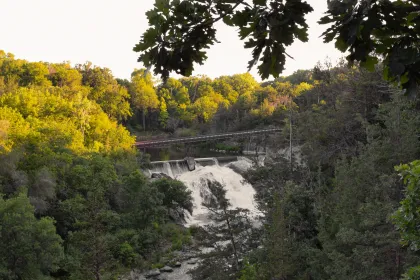
Redwood Falls at Ramsey Park / Credit: Redwood Area Chamber and TourismYou don’t need to go north to find great waterfalls in Minnesota. Cansayapi (Ramsey Park), meaning “where they paint the trees red” in Dakota, is also known as the “Little Yellowstone of Minnesota.” It features two beautiful waterfalls for the price of one visit: Redwood and Ramsey Falls. And the price? Nothing. The park is free to visit year-round, and at 256 acres, it’s the largest municipal park in the state. In other words, there’s a lot to do for all ages.
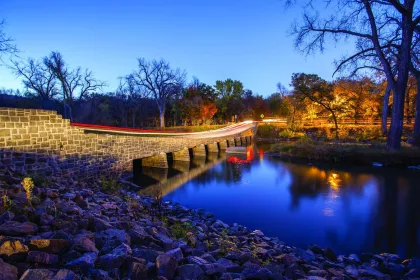
Miles of hiking trails wind through the park, with picnic areas and scenic overlooks along the way. Get an especially good view of both waterfalls from the historic Swayback Bridge, a unique suspension bridge built from granite by the Works Progress Administration in 1938.
The historic Swayback Bridge at Ramsey Park / Credit: Redwood Area Chamber & TourismThroughout the park, you’ll find other historic landmarks, a Department of Natural Resources-maintained trout stream, a campground, accessible and inclusive playground equipment, and even a zoo. Open year-round and free to the public, Ramsey Park Zoo features animals such as bison, elk, deer, goats and prairie dogs, as well as a variety of birds and waterfowl (including peacocks). The zoo even has coin-operated feeders if you’d like to feed the goats.
We bet you can’t see everything Ramsey Park has to offer in one day.
-
Visit the World's Corn Capital
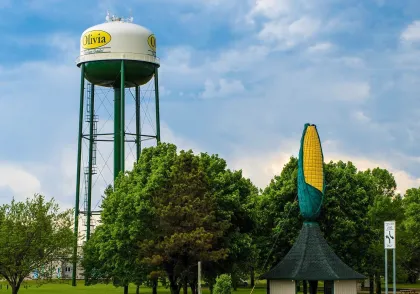
 Credit: Olivia Chamber of Commerce
We’re just like the corn kid; we can’t imagine a more beautiful thing than corn. “It’s corn!” And the place to be when you want to celebrate corn in Minnesota? It’s got to be Olivia.
Each July, this small town in the Minnesota River Valley celebrates this most magical food during its annual Corn Capital Days. The weeklong affair features live music, corn-lympics, parades, theater performances, breakfasts and more.
The festivities culminate in the town’s famous Sweet Corn Feed, where volunteers serve mountains of freshly steamed, buttered and shucked sweet corn to thousands of attendees during a massive, free community feast. Yum.
To cap off your time in the “Corn Capital of the World,” a state-sanctioned moniker given to Olivia in the 1970s due to its prominent local corn industry, grab a selfie with the record-setting 50-foot corn monument downtown. We promise, it’ll be corntastic!
-
Keep the Kids Inspired
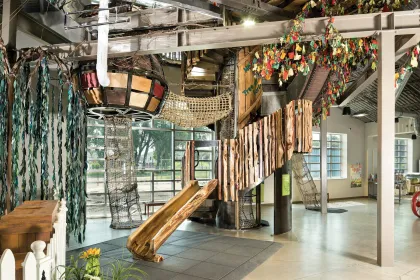
Children's Museum of Southern Minnesota / Credit: Minnesota River Valley National Scenic BywayScience, learning and play, oh my! One of seven children’s museums in Minnesota, the Children’s Museum of Southern Minnesota in Mankato features place-based exhibits and hands-on attractions designed to spark curiosity and wonder.
The museum pays particular attention to agriculture — a hallmark of the region — as well as to southern Minnesota heritage and Dakota culture.
Climb the towering Mankato Clinic Tree of Forts Climber or explore the H2GO Outdoor Water Gallery in the summer months. The museum recommends one to three hours for a visit. It is designed for children, ranging from newborns to age 10.
-
Hit the Slopes at Mount Kato
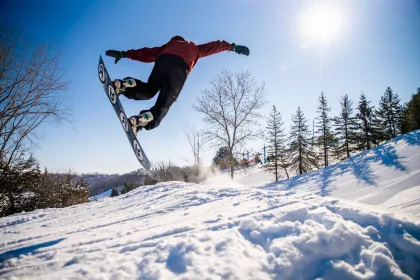
Snowboarding on Mount Kato / Kvidt Creative, courtesy of Visit MankatoNineteen runs, a 240-foot vertical drop, three terrain parks and snow tubing are just a few of the features of one of Minnesota’s best places to ski and snowboard in the winter. The Mount Kato Ski Area, located just southwest of downtown Mankato, is an ideal destination for families of all skill levels looking to get away from the crowds.
If skiing or snowboarding aren’t your thing, Mount Kato offers four lanes of snow tubing, plus glow tubing at night. When you’re done on the hill, grab a bite in the chalet or at The Lift Bar.

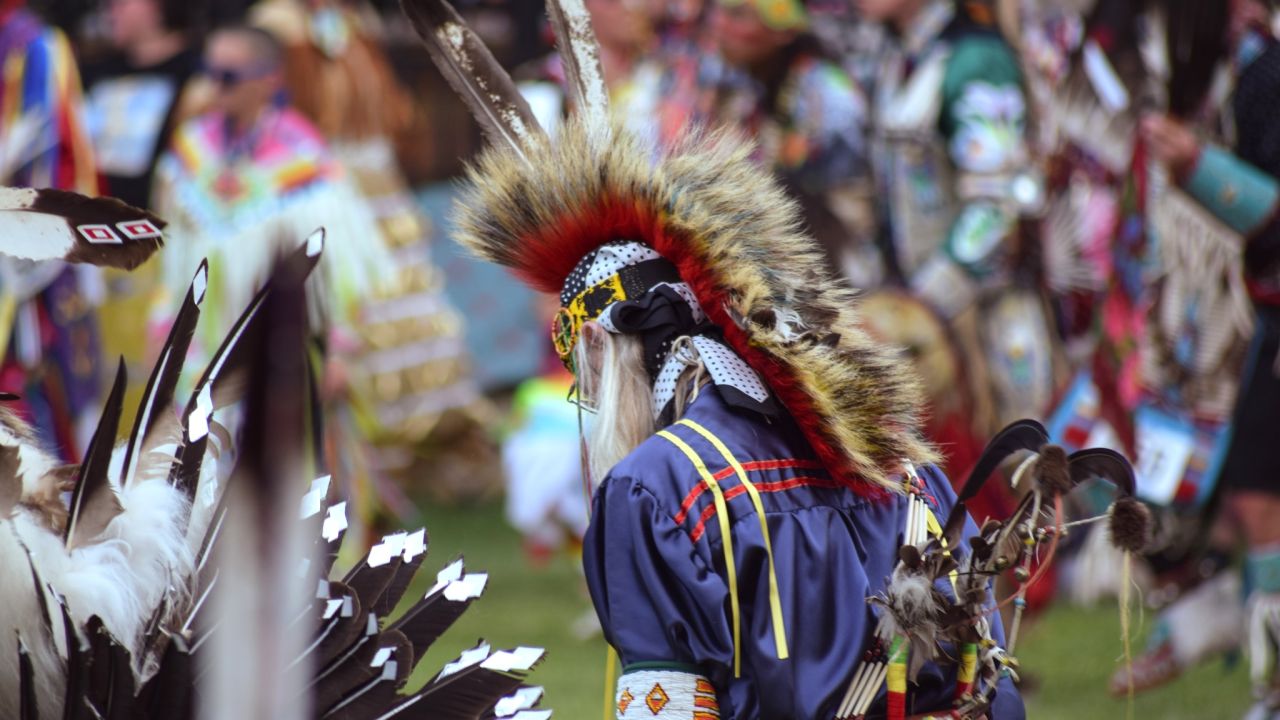
Tribal Nations That Share Geography with the Minnesota River Valley
The Minnesota River Valley shares geography with the Upper Sioux Community and the Lower Sioux Indian Community, both of which have occupied the land surrounding the Minnesota River Valley for thousands of years.
The Upper Sioux call the land “Pezihutazizi Kapi” (the place where they dig for yellow medicine). Their enterprises include Prairie’s Edge Casino Resort and an RV park, and they invite the public to participate in their annual Wacipi on the first weekend in August.
“Lower Sioux” is the name given to the Lower Sioux Indian Community after the 1851 treaty, though the Tribe is also part of the Mdewakanton Band of Dakota. In 2017, the Cansayapi Culture Department was established through Tribal resolution No. 17-137 to enhance the Tribe’s capacity for cultural preservation.
The Lower Sioux also operate the Lower Sioux Early Childhood and Dakota Language Immersion School, which aims to raise the next generation of Dakota language speakers, as well as the Lower Sioux Historic Site.