
Things to Do in the Minneapolis-St. Paul Metro Area
Minnesota’s beating heart is the Minneapolis-St. Paul metro area. With award-winning cuisine, world-renowned arts and culture, teams in all major sports leagues, the Mall of America, and the most Fortune 500 companies per capita of anywhere in the nation, Minneapolis-St. Paul punches far above its weight.
Whether you’re looking to spend the weekend or build a life, this nature-filled metro has something for everyone.
-
Why do people call Minneapolis-St. Paul the Twin Cities?
 Twins icons Minny and Paul shake hands above Target Field / Credit: MLB.com
While some may call St. Paul “the last city of the east” and Minneapolis “the first city of the west,” the two are much closer than any other cities in a metro area, giving them the “Twin” moniker. Separated by the Mississippi River, it often takes less than five minutes to walk from one to the other.
The technical term for this is “conurbation,” or two urban areas that have grown together to form one metropolis. Locals from greater Minnesota often refer to them as “The Cities,” while those from out of town might use Minneapolis to describe both cities (gone to an event at Grand Casino Arena or the Ordway Center for the Performing Arts? Surprise! You’re in St. Paul!).
Are there differences? Sure! St. Paul has an older, statelier vibe, while Minneapolis is a bit younger and has a larger downtown. But for visitors, the distinction between the two hardly matters; you can have lunch in Minneapolis and dinner in St. Paul without even noticing you’ve crossed the border.
-
Meet Minneapolis, the Happiest City in America
 Minneapolis' Hennepin Avenue Bridge and iconic Grain Belt sign / Credit: Paul Vincent
It’s true! The Institute for Quality of Life’s Happy City Index ranked Minneapolis in its Gold-level tier — a distinction it shares with only one other U.S. city: New York.
It’s also the best city for new college graduates, the fourth most livable city in America, boasts the third-best park system, the fifth most vibrant arts economy, and ranks as the second-best biking city (yes, even in winter). What can we say? Life is good in Minneapolis — for residents and visitors.
 The stunning, Jean Nouvel-designed exterior of the Guthrie Theater / Credit: MCE
The city offers a nearly endless panoply of delights, but some of the most popular activities for first-timers include the world-class Walker Art Center (and adjoining Sculpture Garden, home to the famous “Spoonbridge and Cherry”), seeing the wonder of Minnehaha Falls, catching a show at the Jean Nouvel–designed Guthrie Theater or iconic rock venue First Avenue, and walking, biking or paddling around the scenic chain of lakes.
See where to stay, eat, and things to do in downtown Minneapolis.
-
Visit St. Paul, our charming, historic capital
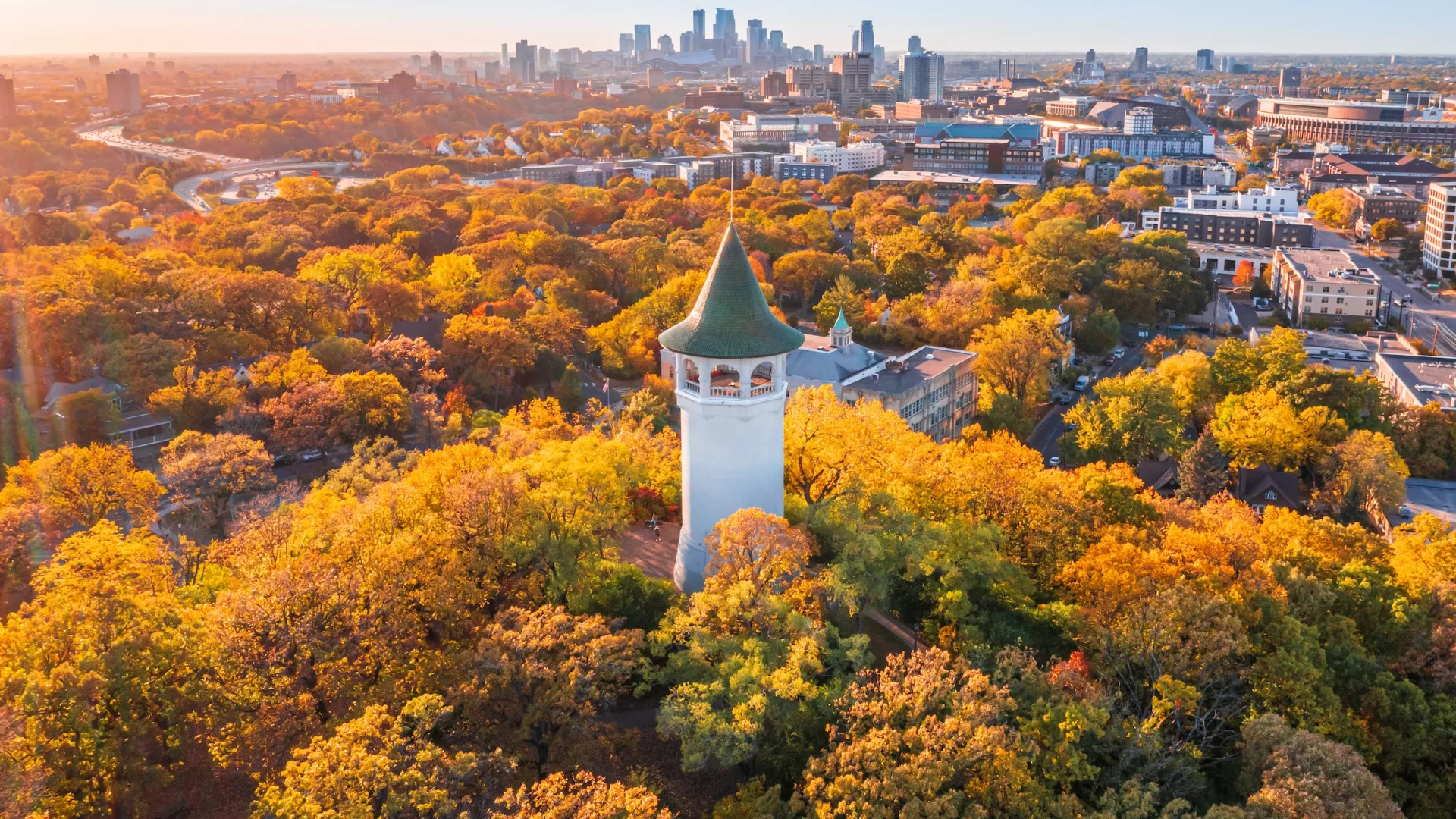
 The St. Paul skyline, as seen from the Mississippi River / Credit: Visit Saint Paul
Originally named “Pig’s Eye” (yes, seriously), Minnesota’s capital city was mercifully re-monikered after the now-iconic cathedral, which rises from a hill overlooking downtown with a kind of grand benevolence.
A richly diverse city filled with natural beauty and charming, historic neighborhoods, St. Paul was once home to F. Scott Fitzgerald and Prohibition-era gangsters, including John Dillinger.
Hmongtown Marketplace / Paul VincentThese days, popular St. Paul attractions include Grand Casino Arena (home to the Minnesota Wild and Minnesota Frost, and host to countless major concerts each year), the Ordway Center for the Performing Arts, Hmongtown Marketplace, and Summit Avenue, which boasts the longest stretch of Victorian homes in the United States.
The capital city is also a hub for shopping — from vintage clothing, home goods and boutiques to a superlative farmers market that lights up downtown every weekend — as well as the Como Zoo and Conservatory, one of the few major U.S. zoos to offer free admission.
See our favorite St. Paul restaurants, bookstores, art galleries and bakeries.
-
Enjoy James Beard Award-winning dining
Owamni's chefs plate dishes at dinnerWhen we ask visitors what surprised them most about Minnesota, the answer is often the same: “the food.” While some may point to our reputation for thinking ketchup is spicy — and that grape salad is a Thanksgiving food (?) — many more are catching on to the diverse, forward-thinking and downright theatrical culinary scene unfolding in the Star of the North.
In 2022, Food & Wine declared, “There were more best bites in the Twin Cities of Minneapolis and St. Paul than anywhere else our restaurant editor ate this year,” naming it a “Sleeper Food City.” Later that year, Minneapolis’ Owamni won Best New Restaurant at the James Beard Awards.
Bûcheron chef Adam Ritter explains one of his signature dishes / Credit: Paul VincentThen, in 2025, Bûcheron joined the list, placing Minneapolis in a rare group of cities to earn that distinction twice (alongside New York, San Francisco, Chicago and New Orleans).
Minneapolis–St. Paul also boasts nine winners (and countless nominees) in the James Beard “Best Chef: Midwest” category, eight appearances on The New York Times’ “Best Restaurants in America” list over the past four years, multiple mentions on Bon Appétit’s “Best New Restaurants” list, plus Food & Wine’s Best New Chef of 2024 and Restaurant of the Year 2025.
-
Root for the home team in every major league
Minneapolis–St. Paul is one of only 12 metro areas in the country with a team in every major sports league and was named the No. 2 women’s sports city in the nation by The Athletic. (The Lynx, our WNBA team, and the Frost, our PWHL team, are regular championship contenders.)
Here in the State of Hockey, we take spectator sports seriously, and our incredible stadiums — from Target Field and Allianz Field to U.S. Bank Stadium — are state-of-the-art and convenient.
The view above Target Field / Brace Hemmelgarn / Minnesota TwinsJust ask Joseph Haj, artistic director of the Guthrie Theater, who says, “If we wanted to go to a Dodgers game when we lived in LA, it took up our entire day. We’d spend an hour and 40 minutes getting to the stadium, another hour parking, three hours watching the game, and then another three hours between getting out of the parking lot and going home.
“I’ve had days here where a friend called me at 5:30 and said, ‘Hey, you want to go to the ballgame tonight? The first pitch is at 6:10.’ And I’m in my seat by 6:10. And once that game is over, I’m walking through my front door 25 minutes later. It feels like time travel.”
-
Revel in rock venues, world-class museums and a regional theater pioneer
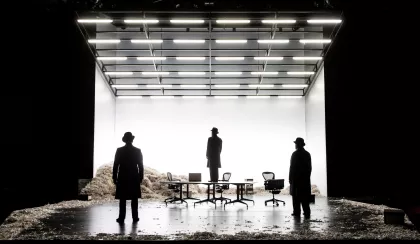
"The Lehman Trilogy" at Guthrie Theater / Credit: Dan NormanIn 1963, Sir Tyrone Guthrie chose Minneapolis as the location of his eponymous theater, helping launch the American regional theater movement. In 1984, Prince filmed "Purple Rain" on the First Avenue stage. In 2008, Minnesota passed the Legacy Amendment, ensuring a portion of the state sales tax would be directed to arts and cultural funding.
To this day, Minnesota remains No. 1 in the nation in state arts funding — and it shows.
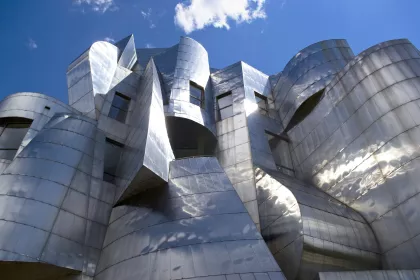
Weisman Art Museum / Credit: Chris CooperWe’re fourth in the nation in regional theater Tony wins, boast three world-class art museums — the Minneapolis Institute of Art, Walker Art Center, and Frank Gehry–designed Weisman Art Museum — and support two major orchestras: the Minnesota Orchestra and the St. Paul Chamber Orchestra. Add in a resident opera company, cutting-edge clubs, a thriving local music scene, and a nation-leading ceramics and craft community.
Minneapolis is also home to the nation’s largest open studio tour (Art-A-Whirl), the Twin Cities Film Festival, and the Loft Literary Center, the nation’s leading independent literary center and home to Milkweed Editions.
See more performing arts picks and the best museums and galleries.
-
Soak up the sun at lakes, parks, waterfalls and one iconic river
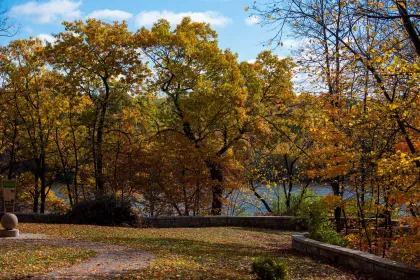
Fall colors on the Winchell Trail / Credit: Minneapolis Parks & Recreation BoardMinneapolis and St. Paul both rank in the top five of the Trust for Public Land’s ParkScore rankings (Minneapolis No. 3, St. Paul No. 5). It’s not hard to see why: 99% of residents live within a 10-minute walk of a park, there are hundreds of miles of biking and walking trails, and 100% of the shoreline along the famous Chain of Lakes is public.
And that’s without mentioning the (mighty) elephant in the room: the Mississippi River, which bisects the cities and offers 72 miles of off-road trails, including the quiet, secluded Winchell Trail.
Minnehaha Falls / Credit: Minneapolis Parks & Recreation BoardBut the most popular search term people use to reach our website is “Minnehaha Falls”. There’s no mystery as to why: at 53 dramatically crashing feet, Minnehaha is the only major urban waterfall in the United States, drawing more than a million visitors each year to marvel at it — and to dine at Sea Salt, the friendly, fast-casual seafood spot with waterfall views and fried oyster po’boys so crispy they could’ve come from that other city on the Mississippi.
See our Minnehaha Falls guide, things to do outside, and the best hiking trails near the metro area.
-
Make it a Mall of America afternoon
Mall of America / Credit: Riley HallawayQuick: what’s the one thing you know about Minnesota? There’s a good chance you just thought of the Mall of America, the grand dame of American malls — a shopping complex so big it has its own indoor theme park (Nickelodeon Universe) and aquarium (SEA LIFE).
The Mall of America stands proudly against anyone who dares to say “malls are dead,” drawing 32 million visitors a year from around the globe. With more than 500 stores — from an entire shop dedicated to laundry (yes, laundry) to the “Beef Jerky Experience” (you can probably guess what’s inside) — there’s a niche store for every interest (and honestly, probably two).
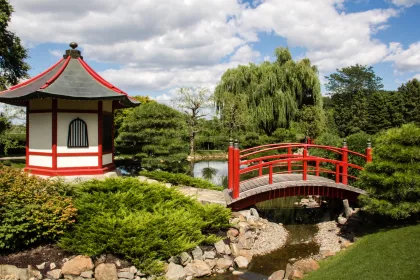
Japanese Garden at Normandale Community College in BloomingtonBut the Mall is hardly all there is to Bloomington, the state’s largest suburb by population. You can spend an entire day exploring without even setting foot inside: the STEM-focused Works Museum, the meticulously maintained Japanese Garden at Normandale Community College, hikes through the Minnesota Valley National Wildlife Refuge, drinks at Nine Mile Brewing, and a show at Artistry (don’t miss the attached Inez Greenberg Gallery).
See our full guide to Mall of America, including what to do with kids, where to eat, and more things to do in Bloomington.
-
Discover the metro's thriving suburbs
Credit: Churchill St.Many of the Twin Cities’ suburbs have a charming, village-like appeal, with downtowns of their own. In recent years, there’s been a suburban restaurant boom, as ambitious city chefs have opened new outposts in communities that had previously been home to more Applebee’s than independent, local originals.
You don’t have to look very hard: Shoreview’s Churchill St. is packed to the gills every weekend, Hopkins’s Hendrix & Siena slings bowls of flavor-packed pastas to convivial weeknight crowds, and Ann Ahmed’s Lat14 in Golden Valley is so popular it enabled her to open two more restaurants in Minneapolis (Khâluna, Gai Noi) and propelled her to a James Beard nomination.
 Some of the restored Scandinavian furniture at Golden Age Design
But a reservation is hardly the only reason to explore the greater metro. Just ask the crowds flooding the shops in Edina’s 50th & France, the families strolling through downtown Hopkins (take the kids to a show at Stages Theatre), Robbinsdale (grab a midcentury treasure at Golden Age Design, then hit Pig Ate My Pizza), and White Bear Lake (the lines down the block at ice cream shop Cup and Cone don’t lie — and there’s nothing dreamier than spring in Matoska Park).
Spooky-season enthusiasts will want to pencil in a visit to Anoka, the self-proclaimed Halloween Capital of the World, while sports fans should hit the 600-acre National Sports Center in Blaine at least once in their lifetimes. There are 50 full-size soccer fields there. Not five. Fifty.
-
Channel Nantucket and the Hamptons
Purify yourself in the waters of Lake Minnetonka. You’ve heard it, right? The famous quote from “Purple Rain?” Listen. We’ve done it. And yes — it’s great. Jumping into a lake is one of the great Minnesotan pleasures (right up there with biting into a State Fair cheese curd and listening to the sonorous call of a loon with your eyes closed as an evergreen breeze ripples your hair).
But for the dry-land enthusiasts among us, Lake Minnetonka is still one of the metro’s top destinations. While we debated the headline of this section — going back and forth on whether Nantucket, the Hamptons, Newport or the Cape was the best comparison — the truth is that none of those East Coast locales really capture what’s going on in this outer-ring western suburb.
Because it’s not the East Coast. It’s Minnesota. And instead of the briny scent of the ocean and aggressive Massachusetts drivers clogging up the toll road, you’ve got polite Minnesotans all driving juuuuuust under the speed limit along a series of interconnected towns surrounding placid, idyllic freshwater.
The Shoreline HotelBut the vibe does call up the cedar-shingled, summery idyll for which “the Hamptons” have become a kind of cultural shorthand.
The main destination towns in the Lake Minnetonka area are Minnetonka, Wayzata, Excelsior and Spring Park — each with its own distinct energy. Minnetonka is the largest and home to the delightful General Store. Excelsior has a lock on the “Hallmark town” moniker, with a dripping-in-charm main street that gives accidentally-bump-into-a-hot-shopkeeper-while-looking-for-vintage-soap-dishes energy. Spring Park is quiet and home to the romantic Shoreline Hotel. And Wayzata is well-heeled and restaurant-rich, with Josefina, Eloise, The Grocer's Table and ninetwentyfive all within walking distance of each other.
You can visit them all in a day or make a whole weekend out of it. (Purification is purely optional.)
-
Head to the home of the Honeycrisp and Prince
Credit: Paisley ParkPrince, somewhat eponymously, is the closest thing Minnesota has to royalty. After all, he famously declared he would always live here because “It’s so cold, it keeps the bad people out” on The Oprah Winfrey Show — a phrase that became a rallying cry for the hardy denizens of the north. In 1985, he began construction on a nine-acre, 65,000-square-foot home-slash-recording-studio-slash-performance-venue in the relatively quiet community of Chanhassen (about a half hour southwest of the Twin Cities).
This distinctive, almost futuristic compound was named Paisley Park, and today it’s one of Minnesota’s top tourist attractions, drawing tens of thousands of visitors each year who come to pay their respects to one of modern music’s greatest icons.
 "Guys & Dolls" at Chanhassen Dinner Theatres
Many visitors to Paisley Park wonder what else there is to do in Chanhassen, and they’re in luck: the University of Minnesota Landscape Arboretum is a USA Today Top Botanical Garden and the birthplace of the Honeycrisp apple. Walk miles of trails that are spectacular in all four seasons, including a stunning collection of azaleas and more than 250 blossoming crabapple trees.
And don’t leave after it gets dark: Chanhassen Dinner Theatres has been offering high-caliber productions (and its signature Chicken Chan) since 1968. “Chan,” as it’s known by locals, often employs Broadway veterans like Michael Gruber and Caroline Innerbichler, and was named USA Today’s No. 6 dinner theater in the nation in 2025.
Visit Paisley Park, take a Prince-themed tour, or plan a music-filled weekend
-
Experience our entertainment capital
Jousting knights at the Minnesota Renaissance Festival / Jennifer ArochaIt’s got smoked turkey legs. It’s got a brand-new amphitheater. It’s got the state’s largest candy store. This is greater Shakopee — the entertainment capital of Minnesota. While the turkey legs are seasonal — they come with the month-long Minnesota Renaissance Festival, one of the oldest and largest in the nation (the fair’s first Queen in 1971 was none other than Tovah Feldshuh) — there’s fun to be had in Shakopee in every season. Just ask the 8 million people who visit Mystic Lake Casino annually.
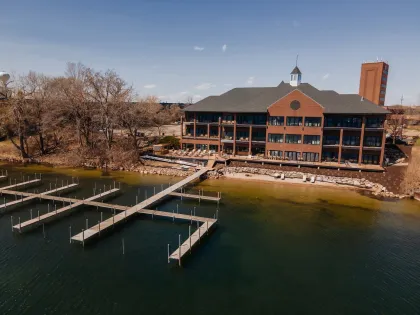
Mystic Lake (technically in Prior Lake) is owned and operated by the Shakopee Mdewakanton Sioux Community (SMSC). Its campus includes a resort, multiple casinos, and a 2,100-seat showroom that hosts both concerts (The Roots, ZZ Top, Jon Pardi) and comedians (Tracy Morgan, Joel McHale, Martin Lawrence).
 Credit: Mystic Lake Casino
The SMSC, a Dakota Nation, is also one of the largest philanthropic giving organizations in the state, with more than $400 million in donations to Tribal communities, local governments, and charitable causes. In 2019, they opened Hoċokata Ṫi (pronounced “ho-cho-ka-ta tee”), a 3,800-square-foot cultural center featuring exhibitions that deepen understanding of the Mdewakanton Dakota people and their history.
Mystic Lake also shares an agreement with Canterbury Park, a horse racing venue and casino in Shakopee, and is the naming sponsor of a new 19,000-seat amphitheater set to host major acts like Dave Matthews Band, Guns N’ Roses, Chris Stapleton, and Hilary Duff in its first season.
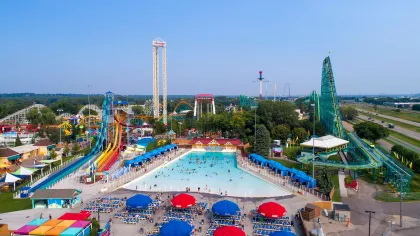
An aerial shot of Valleyfair / Credit: Visit Saint PaulThere’s also — of course — Valleyfair, the sprawling amusement and water park that draws throngs of families each summer. After all, who can resist a 90-foot free-fall water slide and the high-flying thrills of the Charlie Brown Wind-Up?
In nearby Jordan, Mousse Sparkling Wine Co. operates a tasting room featuring its small-batch effervescent wines made with grapes from local growers. We never thought we’d be saying the words “Minnesota-made pét-nat,” but we’re grateful to Josie Boyle and Micah Lennox for bringing the skills they learned after years in the beverage industry to the Star of the North.
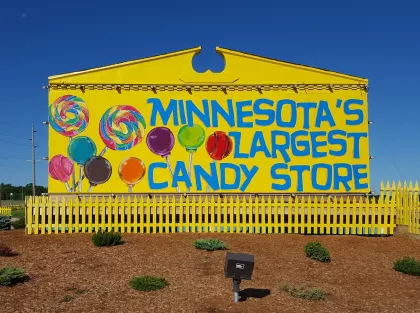
 Minnesota's Largest Candy Store is a yellow beacon off the highway in Jordan
Got a sweet tooth? You’re in luck. Jordan is also home to Minnesota’s largest candy store. Open seasonally (May to November), it’s a delightful gallimaufry of gustatory pleasures. There’s a neon rainbow of candy, yes, presented in a fluorescent river like the salad bar from a dentist’s nightmare. But the store also boasts the world’s largest collection of sodas, along with locally sourced jams, jellies, pickles, meats, cheeses, and puzzles. Yes, puzzles. No, you can’t eat them.
Yes, this is really something you should experience yourself. Bring a child, if you dare, and a camera; the arched ceiling is painted with a whimsical mural by local artist Sean McCann.
-
Hit a top-rated golf course
 Highland National Golf Course
For those looking to tee up, the Twin Cities offer some of the region’s greatest golf courses. But don’t take our word for it — Golf Digest says “the Minneapolis-St. Paul area might be one of the most underrated golf regions in the U.S., with six of the top seven courses in the state within a 30-minute drive.”
Entrepreneur Houston White shared his top metro golf courses with us, and Highland National Golf Course has been named one of the world’s top city golf courses by CNN. (It’s also where you’ll find a sand trap in the shape of Snoopy.)
From Hazeltine to Rush Creek to the Meadows at Mystic Lake Resort, there’s no shortage of green to bring your A-game to in the Twin Cities.
-
Spend the day at a state-supported zoo
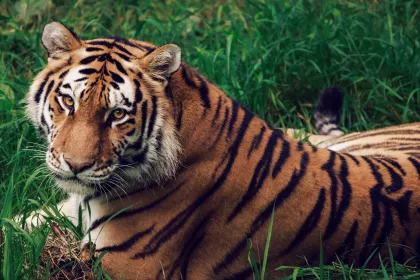
The Amur tiger, one of six remaining subspecies / Credit: Minnesota ZooMinnesotans are well-known proponents of civic engagement, but we really, really love our zoo. It’s one of only two in the U.S. run by a state agency (the other is the North Carolina Zoo).
Why do we love it? Well, first of all, it’s a really great zoo. Expansive and well maintained, the Minnesota Zoo was one of the first to group species by habitat, allowing animals to thrive in large spaces that more closely mimic their natural environments.
The zoo’s six permanent exhibits include the indoor-only Tropics Trail, anchored by an impressive open-air climbing complex where gibbons swing as flamingos bathe in a shallow pool below; the Northern Trail, home to Amur tigers and red pandas; and Discovery Bay, where guests can safely touch sharks, stingrays, and sea stars.
Families walk the Minnesota Zoo's Treetop Trail / Credit: Andrew ParksSeasonally, the zoo opens the Wells Fargo Family Farm, which kicks off with an incredibly popular “Farm Babies” event in the spring. It’s exactly as cute as it sounds. Get your tickets early.
Because the zoo is a state agency, it is extraordinarily committed to education and conservation, both at home and worldwide. Locally, the zoo participates in efforts to preserve plains bison herds, protect endangered pollinators, and restore native mussel species.
The large, mostly outdoor campus has a park-like feel, and in 2024, the zoo opened the Treetop Trail, a 1.25-mile elevated walking path that offers a bird’s-eye view of animal exhibits and leads to Hanifl Nature Center, a space dedicated to nature education with rotating art exhibitions.











Tribal Nations that Share Geography with Minneapolis–St. Paul
Explore Minnesota recognizes the Shakopee Mdewakanton Sioux Community, who share geography with the Minneapolis–St. Paul metro area. The SMSC owns and operates numerous enterprises, including Mystic Lake and Little Six Casino (home to the Mystic Lake amphitheater), the Hoċokata Ṫi cultural center, Dakotah! Sport and Fitness, and Dakota Prairie Composting, the largest commercial organics recycling facility in the Midwest.
The SMSC also runs Native Green, an environmental stewardship program that honors the sacred kinship between the Dakota people and Uŋčí Makȟá (Grandmother Earth). The community is also the largest employer in Scott County and one of the state’s most prolific philanthropic donors, with more than $400 million donated and $500 million in low-interest loans provided since the 1980s.
Learn more about the history and culture of the Shakopee Mdewakanton Sioux Community.